H2B Labs

H2B Labs

H2B Labs builds the architecture that maximises what humans and technology achieve together, while everything around them keeps changing.

Pre-launch H2B Praxis

H2B Praxis is in pre-launch.

The first Live Operating Model. It runs a business process by process, every day. We seal, we measure, we control, we evolve.

Watch: H2B Labs, the film

What H2B Labs is, the constitution, the two proven models, the H2B Stack and the founder.

8 minutes · subtitles

Our category

Symbiogenesis. Two forms of intelligence, one organism.

In biology, symbiogenesis is how two separate organisms merge into one new organism, stronger than either could be alone. H2B Labs builds that union between people and technology inside a business. H2B stands for Human to Business.

For H2B Labs, disruption is normality.

The company

H2B Labs builds the architecture that maximises what humans and technology achieve together, while everything around them keeps changing.

H2B stands for Human to Business. Our category is symbiogenesis: people and technology working as one organism, each making the other stronger. Every product and every venture we create starts from one constitution.

The H2B Labs Constitution

Four laws

The constitution came last, written down after years of practice. It describes how we already work, and everything we build follows it.

  1. Change is the condition.The world around a business keeps moving. We design for that state, so change becomes part of normal operation.
  2. Technology amplifies people.People hold the judgement. Technology multiplies its reach, its speed and its precision.
  3. Intent becomes delivery.What leadership decides is carried into the daily work of every role, step by step, until it is done and measured.
  4. One person is accountable for every decision.Each decision has one named owner, who sees across every function the decision touches.

Our assets

Two proven models

The laws are carried by two models built and proven inside a company under pressure. They are the reason our products work the way they do.

ESOR Framework

ESOR Framework

ESOR is a decision method. It fixes the order in which a team thinks, and it holds the team to that order.

  • The aim is defined completely, with measurable success, before any choice is made.
  • Whole directions are generated and eliminated early, on facts, while change is still cheap.
  • Every choice made afterwards traces back to the aim, so the work that follows is rarely redone.
  • Results are tested against the original aim, and the next cycle starts from what was learned.

The effect: decisions taken on evidence, at the speed of a team that knows where it is going. ESOR works the same way for a person, a team or a machine.

6P Nexus Platform

6P Nexus Platform

6P Nexus is an operating model that fits every type of organisation, from a start-up to a global group.

  • It gives every decision one accountable owner, with full sight across every function the decision touches.
  • It connects what leadership decides to what each role does today.
  • It keeps the whole organisation moving as one system when people, markets or priorities change.

ESOR provides the method. 6P Nexus makes it happen, as envisioned. Together they are the foundation of H2B Skepsis and H2B Praxis.

The H2B Stack

From strategy to intent. From intent to delivery.

Today every change in a company becomes a project, because the company has to stop in order to implement it. The H2B Stack removes that stop. Strategy becomes clear intent, intent becomes running processes, and the company keeps operating while it changes.

Strategy→ H2B Skepsis →Intent→ H2B Praxis →Delivery
Pre-launch

H2B Praxis

From intent to delivery. The first Live Operating Model.

H2B Praxis is a process operating system. Load a company's processes into it and they run: every step has a named owner, every approval its approver, every escalation its route. Everyone knows what to do, what to expect and where to go next. When a process changes, the change goes live inside the operation that is already running.

It is one engine. Every process the company runs, the standard ones and the ones it designs itself, sits on the same licence and talks to every other process.

We sealLeaks end. Every step has an owner and every alert reaches the people who need it.
We measureA true read of productivity, through the real load each person carries.
We controlControls enforced by default, and tested against their intent: a living internal audit.
We evolveBusiness transformation becomes part of normal operation. It is a process, and the company keeps running.
Design stage

H2B Skepsis

From strategy to intent.

H2B Skepsis develops a company's strategy into clear intent: what must happen, who owns it and how success is measured. Its output is a set of defined processes, ready to load into H2B Praxis. It is the H2B Labs engine for producing processes at speed.

Processes can also come from the company itself, from a certified consulting partner or from the H2B Praxis library. The choice belongs to the client.

For consulting firms

Build your practice on H2B Praxis.

Certification is open to partners. Certified firms map their clients' processes, install them in H2B Praxis and earn on every installation, every process and every change that follows.

H2B Praxis · The business case

Your operating model never ran. Now it runs.

Four owners. Four companies. Four problems. Each one costs the world economy trillions, and each one has the same cause.

The problem

Four problems

"This contract keeps us alive. It requires insurance. Nobody ever took it out."

Leaks nobody owns

A leak is a commitment that silently does not happen. Every company leaks.

  • 11% of a contract's value lost after signing World Commerce & Contracting, 2026
  • €1.56 trillion of working capital trapped PwC
  • $3.7 trillion of revenue at risk every year Qualtrics
  • 1 in 4 European bankruptcies caused by late payment industry estimate

"Everyone tells me they are needed. I know there is fat I can no longer afford. I cannot see where."

Load nobody sees

The timesheets say everyone is full. So companies grow fat, hit the wall, then cut blind: the same percentage from everyone. The team that carries the company loses as much as the team that does not.

  • $10 trillion a year in lost productivity Gallup, 2026
  • 9% of world GDP Gallup, 2026

"Our own logistics team scammed us for two years. Internal audit saw nothing. Everything worked as designed."

Controls that bend

Every rule is followed, and the purpose is defeated. Three quotes on file, and the same supplier comes third, every time.

  • 5% of revenue lost to fraud every year ACFE, 2026
  • $5.5 trillion a year, worldwide ACFE, 2026

"We invested two million dollars. Trained everyone. And people are back on the old ways?"

Change halts the company

Every change is a project and a bet.

  • 7 in 10 transformations fall short BCG
  • $27M of every $100M of promised value never arrives UK study

We don't correct peanuts. We correct trillions.

One cause

Decided once. Then it never runs.

Every company has an operating model: who does what, in what order, who approves. Leadership decides it once. Then it lives in slides, in heads and in messaging apps, and the real work happens beside it.

The answer

The Live Operating Model

H2B Praxis is the first operating model that runs. A process operating system: your computer runs any application, the box runs any process, on one engine, with the same people, record and rules. It enforces what leadership decided. It decides nothing itself.

Everybody knows what to do, what to expect and from whom, and where to go when it does not happen. No chasing. No guessing. Leadership sees it all, live: what is moving, what is held, and who is carrying the load.

We sealEvery commitment has a named owner. The insurance gets taken out.
We measureEvery load is seen, from the work itself, not from timesheets. The owner sees exactly where the fat is.
We controlAudit runs on every action, every day. The supplier who always comes third is flagged.
We evolveLoad the new process, and the company keeps running. In the box, the old ways are gone.

Why it wins

One engine

One engine, not a bundle

Others bundle tools. Zoho One connects over forty apps. H2B Praxis is one engine, so every process shares the same people, record and rules.

Proven before the software

Before a line of software was written, the system, run by people, turned around a TV production company in East Africa. Today the box runs its core processes.

Built on two proven models

The logic comes from the ESOR Framework and the 6P Nexus Platform. It cannot be seen, so it cannot be copied. We are two years ahead.

Practically unlimited processes

Build a process yourself, or take it ready-made from our library, from a consultant or from H2B Labs. Your choice. Every one runs on the same licence.

The economics

The minimum alone costs more.

$32 to $76

The basics every company needs, bought as seven separate apps, per employee a month.

List prices, 50-person company
vs
$29

One H2B Praxis licence, per user a month.

Every process included

And seven apps is only the minimum. Every other process your company runs, and every process you design yourself, runs on the same licence, for free.

How to start

H2B Praxis is in pre-launch.

Companies

Request early access, directly with H2B Labs or through a certified partner.

Consultants and consulting firms

Certified partners sell, install and support the box. They keep 80% of the setup fee, and 20% of the subscription for the life of the client. Certification is open to partners.

"We will never succeed if our consultants are not successful."

Ventures

Problems worth solving.

H2B Labs creates ventures from its understanding of people, technology and systems. Each one is placed below by two measures: the size of the problem it addresses, and how far along it is. H2B Praxis is the product on sale first.

H2B Praxis

The first Live Operating Model. A company's processes run in one engine, with every step owned, measured and controlled, and change goes live while the company keeps operating.

Pre-launchEvery organisation

Demeter

Self-sufficiency, the most fundamental element of any society. Demeter finances and organises agriculture in frontier markets so communities feed themselves and farming becomes a business that holds. First deployment: Kenya.

Design, funding-readyCivilisation scale

WEranos

Your dollar, straight to the people who do the work. The donor defines success. The implementer commits to it. Delivery is measured against it. Nothing stands in between. WEranos shows every giver, line by line, how much of each dollar arrived, on one standard in every country, and invites every giving organisation to do the same.

ConceptGlobal giving system

Sovereign Edge

Artificial intelligence that runs at the edge, fully offline and under the control of whoever operates it. For humanitarian teams in the field, it brings intelligence to camps and remote sites. For defence, it keeps capability sovereign where connection is a risk.

Proof of conceptHumanitarian and defence

Tokenfy

Tap. Tokenize. Thrive. A financial platform that puts ownership of real value in the hands of everyday people in emerging markets.

In developmentEmerging markets

Tokenization of Critical Assets

Critical assets such as energy, infrastructure and resources carry deals that stall on one obstacle. H2B Labs holds the key that removes it, so capital and critical assets can finally meet.

ConceptGlobal capital

Thinking

Ideas, in full.

Essays, papers and chapters by Tassos Frangou on governance, power, systems and the people inside them.

← Thinking

Essay

The House Has No Order Yet

The case for AI Governance Architecture. Technology has sprinted ahead of judgment; this essay argues for a discipline that puts order on how these systems are deployed and held accountable.

By Tassos Frangou · 4 min read

Technology has sprinted ahead of judgment. This essay argues for a new discipline, AI Governance Architecture, to put order on how these systems are deployed and held accountable.

The behavior

Today's AI systems are extraordinary at problems that resemble problems already seen. Fluent, fast, frequently right. But push one to the edge of what it knows, and it does something specific and revealing: it does not stop. It does not say "here my knowledge ends." It invents, confidently and fluently, and presents the invention with the same poise as the truth.

That is not a quirk. It is the behavior of immature judgment. Not stupid: immature. A brilliant young person who cannot yet bear to say "I don't know," and so fills the silence with something plausible. The intelligence is real. The maturity to govern it is absent. I use the comparison the way you would say someone is strong as a bull, not to claim the system is human, but because the behavior maps so precisely that no other description is as honest.

The proof it is structural, not temporary

The comfortable assumption is that this is a hard problem, and hard problems fall to scale: bigger models, more data, and the gap closes. I do not believe it, and the reason is precise.

Consider a real decision: pricing and positioning a new consumer device. To get it right you must reason at once across a measured behavioral shift in a younger cohort, the algorithmic dynamics shaping that shift, the disposable-income patterns of that same cohort, and what all three jointly imply about what the product should do and what someone would pay for it. Each domain has been studied. The intersection never has, because it only exists when someone reasons across all four for this product, this market, this moment.

That is where the machine breaks. Not because the problem is expensive to compute, but because for a system that predicts the most probable continuation of what it has seen, a combination never seen has no most-probable continuation. There is nothing to predict toward. The answer is not costly to find. It does not exist to be found. And scale cannot manufacture an answer to a question that has no precedent: you can make the attempt arbitrarily cheap and it remains undefined. So the machine does what it always does at its edge: it invents, fluently, and the fluency hides the invention.

This is not a limitation on the way to being solved. It is a property of the architecture.

The older version of this story

We have seen the shape of this before, at the scale of civilizations. Ancient Athens produced philosophy that ran far ahead of its material capacity, wisdom without the technology to carry it, and could not sustain the gap. We now live in the exact inversion. Our technology has sprinted generations ahead of the wisdom meant to govern it. The asymmetry is the same disease; only the direction has flipped. And an asymmetry between capability and judgment, left to run, does not stabilize. It breaks.

That is the root cause, stated plainly: technology has outpaced philosophy. Not philosophy as an academic discipline: philosophy as the practice of deciding what we should do with power, not merely what we can do with it. We built the capability and skipped the reckoning about how to hold it.

The honest constraint

The correct fix is philosophical, and I will be candid: it is too late to synchronize them properly before these systems are everywhere. The reckoning that should have come first will now have to happen alongside deployment, under pressure, in public. We do not get to pause the world while we think.

So I am not, at this stage, calling for the philosophy, much as I believe it is what the moment ultimately demands. I am calling for something smaller and more urgent. While we work out the deep questions, can we please put some basic order on this rather than betting our future on chance?

A household does not need a resolved moral philosophy to function. It needs order: some structure that holds while the people inside it figure out the harder things. That is all I am arguing for, as the floor. Governance now. The philosophy will still be required to make that governance mature (the two are a sequence, not a substitution), but order is the part we cannot defer.

The discipline that has no name

Knowing where a system can be trusted, where it cannot, and how to build the structure that holds that line under pressure: that is not engineering. The engineers are doing their part, and doing it well. This is a different discipline, and it does not have a settled name yet.

Call it AI Governance Architecture, the practice of building the governing structure around these systems, rather than building the systems themselves. The function, the role, eventually the industry. It is the discipline that decides where capability is allowed to act, and on what authority, and with what accountability when the line fails.

It is also, not by coincidence, the discipline I spent thirty years practicing on human organizations: being the person accountable when judgment failed and the structure had to hold anyway. The same discipline applies to these systems. It cannot be programmed. It can only be earned, which is the one thing scale and youth cannot shortcut.

This is the work. I am doing it.

If you have seen the same gap from your own seat, from any seat, that is a conversation worth having.

© Tassos Frangou. First published [date to confirm].

← Thinking

Essay

The Five Forms of Corporate Power

A framework for career navigation and organisational effectiveness: five mutually exclusive forms of power, each a lever you can read in a room and use in real time.

By Tassos Frangou · 8 min read

The 5 forms of corporate power present a practical decision architecture for personal and organizational growth. This model translates abstract ideas about organizational power into concrete levers anyone can use to improve decision-making, governance, and measurable impact.

I have spent thirty years watching talented people fail to navigate organizations they were more than capable of leading. Not because they lacked intelligence or work ethic. Because they misread how power actually operates, and no one ever gave them an honest map.

This paper is an attempt to provide one.

The Problem With What We Already Have

Most professionals either operate on instinct or reach for French and Raven's classic taxonomy, six forms of power first published in 1959. Legitimate, reward, coercive, expert, referent, informational. It was serious academic work. It is also, in practice, nearly impossible to apply cleanly. Expert and informational power blur into each other. Referent and legitimate overlap constantly. You can spend more time debating which category applies than actually using the framework.

I needed something I could use in a room, in real time, to read a situation and make a decision. That meant the categories had to be mutually exclusive. No overlap tolerated. And it meant each form needed to be anchored to something concrete, the specific mechanism through which influence is created.

That discipline produced five forms.

The Foundation: Decision Architecture for Organizational Power

Corporate power is the capacity to influence outcomes. Through decisions, resources, relationships, access, or execution. It is not inherently good or bad, that part depends entirely on the person wielding it and what they are trying to achieve.

What makes this model hold together is not the five labels. It is the five underlying drivers, one per form, no sharing:

Table 1, Five forms of corporate power and their primary decision levers for impact and growth.

Form Driver
Authority Granted
Dependency Needed
Association Relational
Leadership Influence
Reliability Delivery

Granted. Needed. Relational. Influence. Delivery. Five fundamentally different human and organizational dynamics. That is the architecture. The forms are the surface; the drivers are the test.

"Decision architecture turns organizational power into measurable impact."

The Five Forms of Corporate Power

1. Authority, Power That Is Granted

What this form looks like in organizational design

This one is straightforward. Authority is formal power, the right to make decisions, approve resources, set direction, or direct others within a defined scope. The organization gives it to you through your role, your title, or explicit delegation.

When authority is clear and matched to the capability of the person holding it, it speeds everything up. When it is absent, contested, or held by someone who lacks the judgment to use it well, and this happens constantly, it creates bottlenecks, confusion, and poor outcomes at a scale that is difficult to repair quickly.

Authority without capability is one of the most dangerous conditions in any organization. Most people know this. Far fewer are willing to say it plainly.

2. Dependency, Power That Is Created by Being Needed

Decision levers and impact: how structural necessity creates organizational power

This is where expertise actually lives in the model, and I made a deliberate choice to put it here rather than give it its own category.

Dependency is influence that exists because others require what you have and cannot easily get it elsewhere. Specialized knowledge. Unique access. A critical process only you own. A credential that cannot be replicated quickly. The mechanism is always the same: the organization cannot proceed without you.

This is not just about knowledge. It is about structural necessity. The data analyst who controls the one reliable feed into the planning process. The legal specialist whose sign-off is required before any contract moves. The operations lead who is the only person who genuinely understands how the legacy system behaves. All of them are exercising Dependency power, at very different seniority levels.

For mid-career professionals, this is one of the highest-return investments you can make. You do not need a large network. You do not need a senior title. You need to be genuinely indispensable in a domain that matters to the organization.

The risk is real, though. Dependency concentrated in a single person creates fragility. Organizations that do not manage this well pay for it during absences, transitions, and crises. And the professional who hoards knowledge rather than sharing it may accumulate short-term advantage while quietly damaging the team around them. That is a choice with consequences.

3. Association, Power That Is Relational

What this form looks like in practice: influence architecture without formal authority

Association is influence through relationships, networks, and proximity to decision-makers. It shapes access and attention without requiring formal authority or proven delivery.

It is the executive assistant who controls a senior leader's calendar. The respected peer whose endorsement moves a proposal forward. The mentor whose introduction opens a door that the formal process would never have reached. These are real and significant forms of influence.

They are also the most fragile forms in the model. Association power depends on the continued presence, goodwill, and relevance of other people. When sponsors leave, when the political ground shifts, when relationships cool, Association power can disappear faster than it was built.

The trap I have seen repeatedly: professionals who mistake access for capability. Being close to power is not the same as having it. A career built primarily on association is exposed the moment the relationships that sustain it change. This is not a reason to avoid building relationships, relationships matter enormously. It is a reason not to let them be your only source of organizational influence.

4. Leadership, Power That Is Earned Through Influence

Decision levers and impact: how governance of direction creates durable power

Leadership belongs in a power model not as a separate personality type but as a specific mechanism of influence, the ability to set direction, align others around a purpose, and mobilize coordinated action through credibility and judgment.

It is earned. Not given, not inherited, not transactional. The quality of your thinking, your ability to frame complex trade-offs in ways that move people, your capacity to build the kind of trust that makes others willing to follow you into difficult situations, these are the inputs.

What I find important here is that Leadership power is not reserved for people with senior titles. A mid-level engineer who consistently frames technical decisions in business terms and brings cross-functional teams into alignment is exercising Leadership power. A team lead who builds genuine psychological safety and challenges ideas without damaging relationships is exercising it. The mechanism is available to anyone with the capability to apply it.

The risks are proportionate to the reach. Overreach without accountability. Charisma that does not convert into consistent delivery. Organizations that become too dependent on a single influential individual. These are real failure modes, and they tend to appear at scale.

5. Reliability, Power That Is Proven Through Delivery

What this form looks like: the most accessible decision lever for personal and organizational growth

This is the form that most people underestimate, and the one I would argue matters most over a full career.

Reliability is influence earned by consistently doing what you said you would do, at the quality expected, on the timeline committed. It converts track record into reputation, and reputation into influence.

Here is the distinction that matters: Reliability is not just retrospective. Yes, it is built through past performance. But once established, it operates prospectively. The reputation precedes you into every future situation. When a difficult project needs a lead, when a crisis demands someone who will actually deliver under pressure, when a high-stakes assignment is being allocated, the organization does not run a competency assessment. It calls the person it trusts.

That is power. And it is among the most durable forms in this model. Authority can be stripped in a restructure. Dependency can be automated away or made redundant. Association collapses when sponsors leave. Reliability, genuine, earned, well-documented reliability, is almost impossible to revoke once it is truly established.

It is also the most accessible form of power for anyone early or mid-career. No title required. No existing network. No rare expertise. Deliver consistently. Let the track record compound. The influence follows.

Using the Model: A Practical Framework for Organizational Power

The model is a diagnostic tool, not just a taxonomy.

For your own career: map your current power base honestly. Which forms are strong? Which are absent or underdeveloped? A professional with high Dependency and strong Reliability but minimal Association may be highly effective internally and consistently overlooked for senior roles. That is not a performance failure, it is a portfolio imbalance, and it is fixable with deliberate investment.

For organizational design: a function with concentrated Dependency and no succession planning, unclear Authority, and no Reliability standards is fragile by design. Executives and operators who understand which forms are at risk design better, not just hire differently.

For reading rooms: when you understand the mechanism behind someone's behavior, the behavior becomes predictable. The person who blocks decisions is usually protecting Authority or Dependency. The person who name-drops is exercising Association. The person who consistently takes on the difficult assignments no one else wants is building Reliability. The motives become legible, and legible motives are far easier to navigate.

Boards, executives, and practitioners at every level can apply this framework the same way, the diagnostic is universal. The seniority changes; the forms do not.

On Ethics

Power without ethical grounding is risk without constraint. Every form in this model carries specific failure modes. The professional who masters this model also accepts a corresponding responsibility: to wield it in ways that create organizational value, not just personal advantage.

The professionals I have seen sustain real influence over long careers consistently do the same things: pair capability with accountability, exercise influence with integrity, and invest in developing others rather than concentrating power in themselves.

That is not idealism. That is what durable influence actually looks like in practice.

Closing

The five forms are not a hierarchy and they are not mutually exclusive in practice, the most effective professionals develop and deploy combinations. Authority paired with Reliability. Dependency balanced with knowledge-sharing. Leadership grounded in demonstrated delivery.

What the model gives you is a map. Most people navigate organizational power without one, relying on instinct, absorbing lessons from failures they did not need to have, and misreading situations that a clearer framework would have made legible.

That is the gap this model is designed to close. This framework helps practitioners translate corporate power into measurable outcomes and sustained personal and organizational growth.

© Tassos Frangou. First published [date to confirm].

← Thinking

White paper

Corruption by System

How the global donation system consumes the pledge it was built to protect.

By Tassos Frangou · 12 min read

In the name of compliance, the system builds a machine to keep each donation clean, and the machine devours the worth of the pledge it was meant to protect.

This paper gives that failure a name: corruption by system. No person has to steal for the money to vanish. The structure does it.

The argument runs in four steps: how a gift travels, what the travel costs, what the system's own figures say, and what an honest account would show the giver. It ends with one answer.

1. The one question every giver asks

A woman in Ohio gives a hundred dollars to feed a child she will never meet. A government commits a hundred million to a famine response. The sums differ by six zeros. The question behind them is the same: how much of my dollar arrived?

It is the simplest question in giving, and the system that carries the money has no answer to it. The giver receives a receipt, a photograph, an annual report and a statement that the accounts were audited. The share of the gift that reached the people who did the work is missing from all of them.

Ask any link in the chain and it will answer truthfully for itself. It can state what it received, what it spent and what it passed on. Each answer covers one link. The giver's question covers the whole chain, and the whole chain belongs to nobody.

The scale makes the silence remarkable. Charitable giving in the United States alone reached $617.2 billion in 2025, and $394.2 billion of it, 64%, came from individuals [1]. Public humanitarian funding sits at the other extreme of concentration. Between 2016 and 2024 the four largest public donors, the United States, the European Union institutions, the United Kingdom and Germany, provided between 61% and 67% of it every year [2]. In 2024 the ten largest provided 84% [3].

Millions of households on one side, a handful of treasuries on the other. Both give in good faith. Both ask the same question, and both receive the same silence.

The missing number is the indictment.

A system that moves hundreds of billions of dollars cannot tell a donor what share reached the child. This paper explains why, using the system's own published figures, and then states what an honest system would show.

2. How a pledge travels

Follow one gift from the moment it is made.

A donor gives to a global fund. The fund passes the money to a regional layer. The regional layer passes it to an international organisation. That organisation passes it to a national one. A local coalition, at the end of the line, finally delivers: it buys the food, staffs the clinic, hands over the cash.

  • The global fund receives the gift and sets the terms on which it may be spent.

  • The regional layer adapts those terms to its own rules and adds its own.

  • The international organisation does the same, and manages the grant.

  • The national organisation does the same again, and manages the sub-grant.

  • The local coalition does the work.

Look at what the chain is made of. Four of its five links handle money and paper. One link handles the need itself. The system's staff, its rules and its attention gather where the money enters, far from the place where the work is done.

Each layer sets its own requirements on the one below it. Each layer keeps its own share. Both habits are reasonable when seen from inside any single layer: an organisation that handles other people's money has costs to cover and duties to discharge. The damage appears only when the layers are added together, and nobody in the chain is asked to add them.

Projects are awarded in the same way. An implementer receives funding only after every layer above it has satisfied its own checklist. Intermediaries validate intermediaries. The people closest to the need are the last to be approved and the last to be paid.

The order of approval and the order of need run in opposite directions. Authority sits at the top of the chain, where the money enters. Knowledge of the need sits at the bottom, where the work is done.

3. The price of clean

Every one of these layers exists for a respectable reason. Donors want assurance that their money is safe from theft, from diversion and from misuse. So the system builds controls. Each layer must prove to the layer above that the money it passed down was clean.

The proof then travels back up the same chain. The local coalition reports to the national organisation. The national organisation rewrites that report for the international one. The international organisation rewrites it for the regional layer, and the regional layer for the fund. At every step the report is recast in a different format, a different language and a different calendar.

A support industry lives on this traffic: auditors, evaluators, report writers and consultants, each paid to make the upward proof acceptable to the next reader. Their work is honest and often excellent. It is also paid for out of the gift.

So the gift pays twice. It pays once on the way down, as each layer keeps its share. It pays again on the way up, as each layer's proof is produced, checked and rewritten. The first cost appears in every budget. The second is spread across thousands of small organisations and appears in none.

Consider the organisation at the end of the line. It may serve several chains at once, each with its own templates, its own audit and its own reporting dates. The people who know the community best spend their weeks producing proof for readers they will never meet.

A system built to prove its innocence, not its outcomes.

This is the price of clean. The system spends the donor's money to demonstrate that the donor's money was well guarded. Each control protects one layer. Together the controls consume a large part of what they were written to protect.

Any business owner recognises the pattern. A producer who sells directly to the final buyer holds a better position than one who sells through twenty intermediaries: more of the price reaches the producer, and the buyer knows what was paid for. Commerce learned this long ago and shortened its chains. Giving is the only large flow of money that still passes through that many hands, with no settlement between the first hand and the last and no reporting from end to end.

4. Corruption by system: a charge against the structure

The words are chosen with care, so their limits are stated first.

The people inside the large foundations and agencies are good people. Many have given their working lives to this cause, often at personal cost and sometimes at personal risk. This paper holds no evidence of individual corruption and makes no such claim. It names no organisation as corrupt.

The system is the defendant.

Corruption, in its oldest meaning, is the decay of a thing away from its purpose. A gift has one purpose: to reach the person it was given for. A structure that takes a dollar given for a child and turns a large part of it into administration, validation and reporting has corrupted that gift, even when every form is correctly filled in and every signature is genuine.

No person has to steal for the money to vanish. The structure does it.

That is what makes the failure so durable. Theft can be investigated, prosecuted and stopped. A loss that is produced by rules, each of them defensible, leaves nobody to investigate. Every participant can show a clean audit. The shortfall belongs to no one, so no one is asked to explain it.

It also explains why reform from inside has been slow. Each layer can improve its own efficiency and leave the chain exactly as long as before. A manager who cuts her own costs by a tenth has done her job well, and the gift still passes through five hands. The fault lies in the design, and a design is changed only by someone who can see all of it.

The charge is also a relief. If the loss came from bad people, the remedy would be to find them and replace them, and the system would stay as it is. Because the loss comes from the design, the same good people, given a shorter route and a single account, will deliver more of every gift.

5. Their own numbers

The system has measured this failure itself, and published the result.

At the World Humanitarian Summit in 2016 the largest donors and aid agencies signed an agreement known as the Grand Bargain. They pledged that at least 25% of humanitarian funding would go to local and national responders “as directly as possible” [4]. The signatories set the target, chose the wording and gave themselves until 2020 to meet it.

In 2022 the share of humanitarian funding given directly to local and national responders was 1.8% [5].

Share of humanitarian funding going directly to local and national responders
Pledged in 2016 At least 25%
Delivered in 2022 1.8%

The pledge itself was an admission. The target was set because a small handful of large United Nations agencies and international organisations were receiving the greater part of international humanitarian funding [6]. The signatories knew where the money was pooling, and promised to move it.

Evidence from the field showed how far there was to go. Research by the Overseas Development Institute in Somalia and South Sudan, published in 2017, found that around 4% of funds went directly to local and national actors, and a further 6% to 9% reached them through one transaction layer [7]. The remainder, close to nine-tenths, either travelled through more hands or was spent by international actors themselves.

The most telling evidence is the most recent. In the Grand Bargain self-reporting for 2024, most donors report that they are not able to fund local actors directly [8]. The route is closed by the system's own rules. The institutions that made the pledge are prevented from keeping it by the controls they built.

Six years after a public commitment by the most capable institutions in the field, the delivered share stood at 1.8% against a promise of 25%. No scandal explains that gap. The structure does.

6. The arithmetic of layers

How much is lost in the chain? No published figure answers that question, so this section offers an estimate and shows its method.

Each layer keeps a share of what it receives to cover its own costs, and the shares compound. Where every layer keeps the same share, the value that reaches the implementer from one dollar is that dollar multiplied by one minus the share, once for each layer.

Layers 7% per layer 10% per layer 15% per layer
2 $0.86 $0.81 $0.72
3 $0.80 $0.73 $0.61
4 $0.75 $0.66 $0.52
5 $0.70 $0.59 $0.44

Illustrative estimate. Value reaching the implementer from $1, where each layer keeps the share shown. The shares are assumptions, chosen to show the effect of compounding; they are taken from no published source.

A chain of four or five layers, each keeping between 10% and 15%, delivers between 44 and 66 cents of the dollar to the implementer. The implementer's own cost of reporting back up the chain comes on top of that.

Compounding is what surprises people. A share of 10% sounds modest, and at one layer it is. At five layers the same modest share has taken 41 cents of the dollar. No single share in the table is extravagant. Ordinary shares, repeated, produce an extraordinary loss.

Our estimate. In a typical multi-layer chain, somewhere between 40 and 60 cents of the dollar may reach people as food, medicine or cash. This is an estimate built on the assumptions shown above. No end-to-end figure is published anywhere, and that absence is the point.

One comparable flow of money shows what measurement looks like. Migrant workers send money home across the same borders, often to the same villages. The World Bank tracks what it costs them. Sending money home costs an average of 6.36% of the amount sent [9], and the world calls even that too high: the Sustainable Development Goals set a target of 3% [10].

The contrast is plain. A cost of about six cents in the dollar is measured, published and treated as a global problem with a formal target. The cost of moving a gift is measured by nobody, published by nobody and carries no target at all.

The two flows are close cousins. Both move money from richer places to poorer ones, often to the same families. One has a published price and a target. The other has neither.

7. What an honest system shows the giver

The remedy begins with one number.

An honest system shows the giver, for every dollar, the route the money took, each hand it passed through, what each hand kept and how much reached the people who do the work. It shows this on one standard, so that any two organisations, in any two countries, can be compared on the same terms.

  • The route: every layer between the giver and the implementer, named.

  • The share: what each layer kept, in cents of the dollar.

  • The arrival: how much reached the implementer, and when.

  • One standard: the same account, in the same form, for every organisation.

The figures already exist. Every layer knows what it received and what it passed on. They have never been joined from end to end and shown to the person who gave.

This paper asks for nothing more than that. Measuring well-being is the implementers' job: the clinic knows whether its patients recovered, and the school knows whether its pupils can read. The channel has a simpler duty. It owes the giver an account of the money: how much of each dollar reached the people who do the work.

A system that publishes that number will shorten itself. Givers will choose the routes that deliver more. Layers that add value will be able to show it, and will be paid for it. Layers that only pass money along will become visible for the first time.

A giver who can see the route can choose the route. That single change moves the pressure in the system from proving innocence to delivering more, and it asks nothing of the people inside it except the account they already keep.

8. WEranos

Your dollar, straight to the people who do the work.

The donor defines success. The implementer commits to it. Delivery is measured against it. Nothing stands in between.

WEranos finds the most efficient route, funds the implementer directly, and shows, line by line, how much of every dollar arrived, on one standard in every country, so every organisation can be compared on the same terms.

We can show you where your dollar went. We invite every giving organisation in the world to do the same.

To talk about WEranos, write to tf@h2blabs.com.

Sources

Every figure in this paper is quoted from the published source listed here, except the layer arithmetic in section 6, which is the author's estimate and is labelled as such.

[1] Giving USA Foundation, Giving USA 2026: charitable giving in 2025. https://givingusa.org/giving-usa-charitable-giving-rose-to-617-20-billion-in-2025-surpassing-the-600-billion-mark-for-the-first-time/

[2] ALNAP, The State of the Humanitarian System 2026, chapter 1.1, The financial size and shape of the system. https://alnap.org/help-library/resources/sohs-2026/chapter-1-prioritisation-under-pressure/1-1-the-financial-size-and-shape-of-the-system/

[3] Global Humanitarian Assistance Report 2025, executive summary. https://alnap.org/help-library/resources/global-humanitarian-assistance-gha-report-2025-e-report/executive-summary/

[4] United Nations, statement of the Grand Bargain target. https://www.un.org/en/node/225580

[5] Devex, Why the Grand Bargain failed to deliver its promise of local funding, 2023. https://www.devex.com/news/why-the-grand-bargain-failed-to-deliver-its-promise-of-local-funding-105848

[6] Nonprofit Quarterly, on intermediation and funding to local groups. https://nonprofitquarterly.org/intermediation-funding-aid-agencies-leaves-little-local-groups/

[7] Overseas Development Institute, research on funding flows in Somalia and South Sudan, 2017. https://cdn.odi.org/media/documents/12459.pdf

[8] Highlights of the 2024 Grand Bargain self-reporting cycle, ReliefWeb. https://reliefweb.int/report/world/highlights-2024-grand-bargain-self-reporting-cycle

[9] World Bank, Remittance Prices Worldwide. https://remittanceprices.worldbank.org

[10] World Bank, press release on remittances, 26 June 2024. https://www.worldbank.org/en/news/press-release/2024/06/26/remittances-slowed-in-2023-expected-to-grow-faster-in-2024

© Tassos Frangou. First published November 2026.

← Thinking

From the book

The Business Rainforest

Every company lives under the same laws. Each layer of the business world feels them differently.

By Tassos Frangou · 5 min read

The business world works very much like a rainforest. Inside the same world there are layers of communities. Each lives in its own environment, and all of them depend on one another.

Put simply, there is a layer of small firms. Above it sit the medium and large enterprises, then the very large private companies, then the corporations, then the large dominant corporations. At the top are the communities of investment and capital. All of them work in the same legal and regulatory universe. Each meets challenges that belong to its own layer.

In a rainforest, the same few square metres hold several worlds. At the top is the emergent layer, where the animals are exposed to the extremes: direct sun, wind and rain. At the bottom is the forest floor. It is humid, its temperature hardly moves, and it receives about 2% of the sunlight. Yet every layer answers to the same laws of physics and the same weather.

Business is the same. The layers face the same markets, the same legal framework and the same regulators, and they experience them in very different ways. That may sound absurd at first. The reason is that the social, legal, market and regulatory forces land differently depending on a company's size, its reach, the power of its brand and the capital behind it.

One incident, two managers

Take two layers that sit far apart.

George owns a small grill on a beach front. Two doors down, James manages a branch of a global restaurant chain. On the same afternoon, the same thing happens in both places. A family on holiday begins to quarrel at its table. The quarrel grows loud. A small child runs crying between the tables. The other customers get up and leave.

George sees his customers walking out. He remembers that if today's takings fall short, he will miss the VAT payment due tomorrow, with everything that follows. He sees the scene as a threat to his business and his peace. So he asks the family to leave, and he calls the police before the matter goes any further.

James also sees his customers walking out. He remembers his training: the policies, the sensitivities, the liability for any injury inside the store, the legal exposure for treating a customer badly, and the calls he will have to make to ask for advice and to explain himself. His shift ends in an hour. What to do? I suspect James is still thinking about how to handle it without losing his job or falling into corporate disgrace.

And the consequences? George serves tourists, and locals who have known him for years. They know who he is and what he stands for. A few may hear of the incident. Some will ignore it, some will raise it with him, and one or two may stay away. A month later it is forgotten.

For the chain, a badly handled incident can travel the world. A video appears. The press and social media take it up. The company pays for a recovery campaign, retrains its staff in every country and sends in the lawyers. Senior executives spend weeks on damage control. The corporation and its franchisee may end up at war, each trying to move the blame. And James? James who?

The same promotion, twice

You may say that retail is a sensitive trade and the example is extreme. So let me bring it home to a plain commercial case.

Peter owns a mid-size wholesale company in Greece that distributes spirits, beer and soft drinks. Ten years ago he saw a gap and launched a ready-to-drink coffee made with a local spirit. The bet was superb. Out of nowhere, his brand now holds 20% of its category.

Recently he took a second bet: another ready-to-drink, made with raspberries and the same spirit. Consumers like it. But it is new, the wholesale trade has been hurt by a decade of crisis, and many secondary wholesalers are unwilling to stock it. The product is failing to reach the bars and kiosks.

So Peter uses the strength of his coffee to push the newcomer. For every five cases of coffee, a client who also takes one case of raspberry earns a large discount on both. It works. Depending on how it is done, it is either illegal or merely frowned upon. At worst Peter pays a fine, takes a slap on the wrist, and life moves on.

Now let a global spirits group run the same promotion, with its dominant whisky brand as the vehicle. Within a day a competitor has informed the competition authority. Because the brand holds a dominant position, there is no legal way to run that offer. Inspectors arrive and take the phones, the computers and the files. A very large fine follows, and probably audits in other countries. Then come the headlines about a giant crushing small firms, and the questions about its pricing between countries.

Both cases happen in the same place, under the same law, in the same society. The exposure and the complexity bear no comparison.

No animal rules every layer

The realities we live with shape the skills we need, the way we think and, in the end, the way we behave. In the rainforest, different animals dominate different layers. In business, each layer asks for a different mix of skills, capabilities and behaviour, and it defines a strong player in its own way. As a rule, no animal dominates every layer. The few exceptions are called legends, and luck and circumstance have usually helped them.

Companies do move between layers over time. A move holds only when the leadership can transform itself to fit the new layer, or when new players join it. Every such move is painful, for the company, for its people and often for its customers. You can always put an okapi in the canopy. Unless it learns to fly, it will climb or fall back to the forest floor where it belongs. The only questions are how it gets there, and whether it is hurt on the way.

Animals call this evolution, and it takes an age. Companies call it business transformation, which is a polite term for forced, accelerated evolution. We change ourselves on purpose to reach a goal. It takes commitment, focus and an honest view of the pain involved.

Most attempts to change layers fail. The main cause is leadership, or the lack of it. Some leaders believe no transformation is needed. Others are sure they can transform themselves and the organisation at the same time. Others hire consultants, and fail anyway because the leader has stayed the same. When everything else has failed, they turn to the invitation: they bring in a strong player from the layer they want to reach.

The invitation is made with a true heart on both sides, and it carries a great deal of promise. Then reality arrives. The guest finds himself in an environment where he may be a poor fit. The host sees the guest doing things that look wrong to him. Two worlds have collided.

© Tassos Frangou. First written about 2019.

← Thinking

From the book

When Two Worlds Collide

A founder hires the corporate chief he admires. Both are winners, and the collision is predictable.

By Tassos Frangou · 5 min read

Every move from one layer of the business world to another disrupts the company that makes it. If the move is painless, one of two things is true. Either the company was already performing below its potential and was ready for the next layer, or the move will never hold.

All such moves are hard. One has proved hard again and again, and it is the one I know most closely: the move from a large private regional company to a corporation. These companies have conquered their own layer. They own an offer that can scale, and they feel ready to conquer the world. The vision is usually there. The challenge is the transformation it demands in every function and at every level, and above all in the leadership.

The challenge comes in many forms. I will take the most common one: a self-made entrepreneur who has built a strong regional player and has already carried it from small firm to large private company. I will call him Entre.

Entre meets Maximus

Entre is in his mid-fifties. His company succeeds across its region. He knows what he wants it to become, and he believes he holds the commercial keys.

He has tried to transform it before. He hired a leading firm of consultants, and he found that they did not understand the substance of his business. They talked theory all day. So Entre stepped back and decided to recruit a proven chief executive from a company that looks like the one he wants to own. I will call him Maximus.

They talk many times, and Entre is impressed beyond anything he expected. Maximus takes Entre's vision and makes it larger. He explains how the company could be structured, which route to market suits each geography, and which alliances would bring the vision forward by years. He seems to have the answer before the question is asked. And he makes sense.

Entre starts to invent reasons to meet him. He feels like a thirsty man who has crossed the Sahara and arrived at an oasis. He has to have Maximus, whatever it takes: money, status, benefits, freedom to act. And his commitment is sincere.

Maximus, for his part, is tired of corporate nonsense. He is tired of asking twice in order to act once. Here is a carte blanche: the chance to take a real company to the next level without endless meetings to sell each idea to boards, investors and shareholders. The salary is high, the upside is large and the autonomy is complete. It could be his last job, the moment he cashes in the chips of decades of hard work.

It looks like the perfect union. So why should this marriage ever be in trouble?

Where each man comes from

A person's history explains a great deal of his behaviour.

Entre started his first business in his early twenties. After an eventful attempt at running a bar he moved into trading, and he proved very good at it. He can sell sand in the desert and ice in the Arctic. He is focused, he takes no prisoners, and he is as hard-headed as a rhino.

Success was far from easy. There were countless nights with no sleep, and more brushes with bankruptcy than he can remember. In the hard years his family went without. Partners and employees cheated him. More than once he was dragged into court. Each time he came back, a little through wit, a little through the backing of a financier, a little through luck, and always through his tenacity and his devotion to the business.

The business is his life. He tried golf, and the golf course became one more place to set up the next deal. He is a family man, and the family works in the company, because family can be trusted. Everything and everyone turns around the business.

He is also tired. He is tired of holding the whole thing in his two hands, and of good people who lack the vision to take it further. Sometimes the tiredness is real. Sometimes it is the name he gives to a harder thought: that he has reached his peak, and the next layer is beyond him. He needs Maximus.

Maximus is in his early forties. He comes from a middle-class family that scraped its savings together to give him a good education abroad. He made full use of it. He joined big companies at the bottom and built his career in a country where his accent always marked him as a foreigner. He had to work twice as hard as the rest to stand out. He succeeded, through work, constant learning and a few risks that could have cost him his job or his name.

He went on to work across the world, to run large operations and finally large companies. He prides himself on an open mind and a strong commercial sense, and he believes he carries the entrepreneur's bug. He would love a company of his own. But start from zero, and walk away from that salary and that status? No.

Now Entre offers him everything at once: the keys to a substantial company, a single mandate to make it bigger, and gold equal to his weight if he succeeds. Maximus is in.

Two winners, one transformation

So two men who are clear winners in their own layers join forces to lift Entre's company to the next one. They come from different walks of life. They agree on what must be done, and the rewards can be remarkable for both. Why would that bring them to their knees?

Because the task itself is a transformation, the most difficult thing a company can attempt, and each man was formed by a different layer. It will test the limits of everyone involved. In the best case, one of the two is unprepared for it.

The causes fall into two groups. The first is origin: the habits each layer builds into the people who grow up inside it. The second is size: what the larger business will demand, set against how the company behaves today.

These differences have to be recognised and acted on, and both men have to be honest about what they can and cannot do. Where that fails, the partnership damages the organisation and the vision it was formed to serve.

© Tassos Frangou. First written about 2019.

← Thinking

From the book

I Am the Company

I was warned for doing my job too well. It took me years to see that the warning was right.

By Tassos Frangou · 5 min read

A privately owned and privately governed company differs from a true corporation in many ways. Some differences are obvious and tangible. Others are matters of culture and governance, and they are harder to see. A story of my own shows them best.

A warning in place of applause

I once held a C-level position in a very large European blue-chip company. Part of my mandate was to restore the morale and engagement of my function. As a proper blue chip, the company gave me many tools for the task, and it had solid audits to measure whether I succeeded.

People generally say that I am an engaging leader, with a capacity to reach everyone in a real way. So I put that talent to work. The result was one of the strongest turnarounds the company had seen on that measure. The engagement score of my function rose to the top of the company, an improvement of 162% on the previous audit.

I sat at my desk and waited for the congratulations. They never came.

Group HR called me in to discuss the audit. They told me they were very pleased with the result and gravely concerned by what lay behind it. The improvement was beyond doubt. But the analysis showed that my people were engaged because of me, and the company and its brand had little to do with it. They were my fans. They were following a person.

For the company, however pleased it was, that was a serious risk to carry. It also ran against what a large corporation stands for. I walked out with a warning that this had to be fixed.

It was a shock. I lacked the maturity then to see the consequences. Friends rushed to tell me how unfairly I had been treated. Many years later, I can say that the company had a point, even if it could have handled the conversation better. Had I been an investor in that company, I would have been glad to see engagement rise. I would also have refused to let its success depend on whether one executive stayed or left. No serious company wants that exposure to any single person.

Where the owner ends and the company begins

Keep that story in mind and look at Entre, the founder who has built a strong regional company, and at Maximus, the corporate chief executive he has hired to take it further.

Who is Entre to his company? However you slice it, Entre is the company. He is the beginning and the end of everything material that happens in it. No clear line shows where he stops and the company begins. Speak to the market about the company, and his name appears within a minute.

For a company in his layer, that is a reasonable risk. He is usually its strongest link, and the company lacks the infrastructure, the governance and the controls to work in any other way. Building them is exactly what Maximus has been hired to do.

Until then, Maximus has to remember the link in everything he does. I have lost count of the times I ended up in conflict with an owner for doing exactly what we had agreed.

Here is a typical case from a turnaround. Cash is short. The board agrees to delay payments to suppliers while the recovery takes effect. The suppliers are classified, impartially, as strategic, operational, secondary but vital, and the rest, and each class is paid accordingly. The owner approves the plan. Then the call comes.

"What is happening? Have we lost control of the company? Bill tells me he is not being paid, and our people are dancing around him. I have run this company for two decades and I have never missed a payment. I cannot show my face."

I remind him of the board meeting, and of the plan he liked. I point out that Bill's company was probably classified as neither strategic nor operational.

"What are you talking about? This is Bill. I never said you could delay payments to Bill."

Bill sells office supplies. He has stood by the owner for more than a decade, and the two men are friends. To Maximus, that is all very nice, but he is trying to save the company. It can live without office supplies. It cannot live without its employees, its products or its peace with the tax authorities.

What Maximus cannot see is that Entre has just been made to look like a failure in front of his own community, because that community does not separate the man from the company. When a global brand pays late, the brand paid late, and nobody blames its chief executive by name. In Entre's company, Entre paid late.

Both men are now stuck. If Maximus gives way, he undoes everything he has told the staff, the trade and the board. If Entre holds firm, he has to tell a friend that his new chief executive knows best. Small as it looks, this kind of conflict returns again and again unless the two agree, early and honestly, on who decides what, inside the company and outside it.

If the boss is not on board, there is no board

The same link shapes how decisions are made. Entre has always been the last word. He answers to nobody and has nobody to blame. He owns his mistakes, and he feels free to take risks that he alone has judged worth taking. His people may argue with him. Everyone knows that if he is unconvinced, further debate is pointless.

Some owners are gentle and welcome open discussion. I have worked for such owners. The unwritten rule holds all the same: if the owner does not buy it, nothing moves.

So the executives discuss, try to persuade, and then deliver the owner's wishes. Success and failure both belong to him. A chart of authority has little purpose in such a company. Where one exists, it is overridden or ignored. Many of these companies turn over more than fifty million dollars a year, and some far more, while they think and operate like mid-size firms. The founder moved them through the layers so quickly that they never matured in any of them.

Maximus built his whole career inside a predefined order. He knows which decisions are his and where to take the ones that are above him. Experts supply what he needs, and the rules are clear to everyone.

In Entre's company he is lost in fuzzy rules. People expect him to decide operational matters in a business he has only just met. The people who hold the knowledge are afraid to speak and suggest asking Entre. And Entre may walk into any meeting and take it over, because the whole organisation is trained to listen to him alone.

To reach the next layer, Maximus has to rebuild all of it: who decides, who owns the result, who is accountable, and the culture around them. He has to do it while the company keeps running. That is the real distance between a company that is its owner and a true corporation, and both men have to cross it together.

© Tassos Frangou. First written about 2019.

Tassos Frangou

Founder

Tassos Frangou

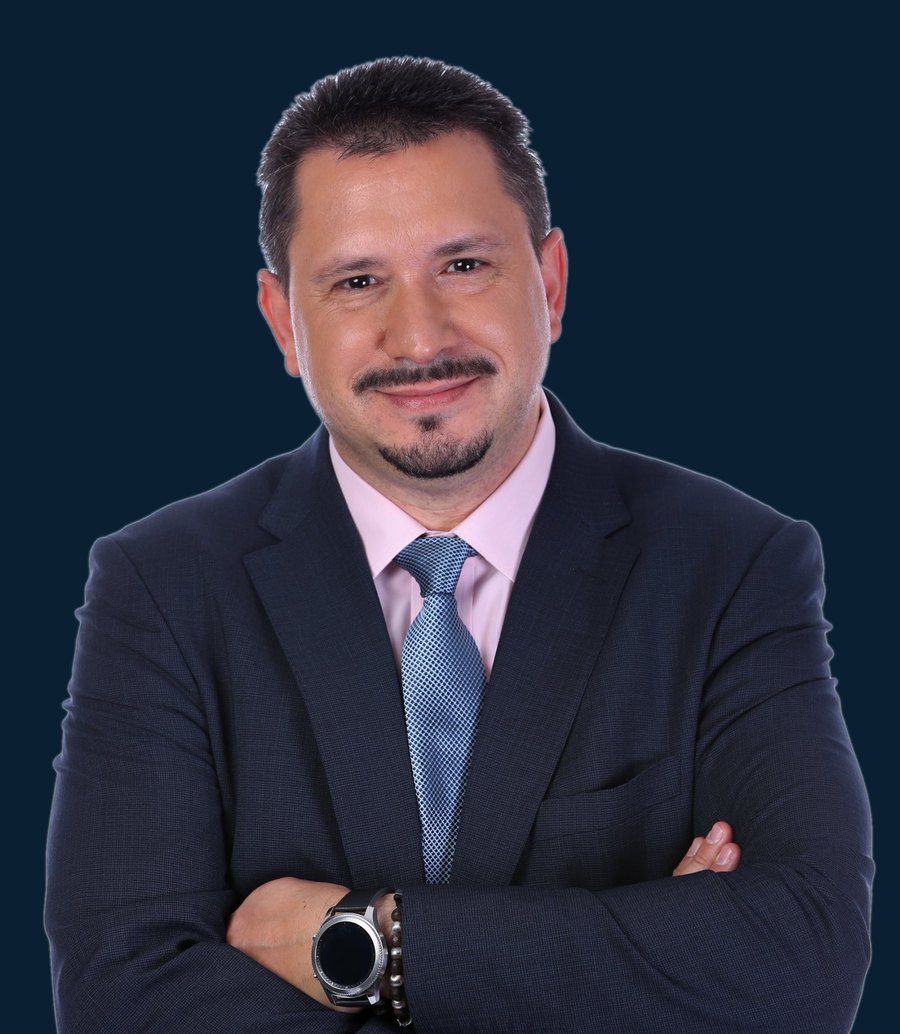
Founder and Managing Partner, H2B Labs.

CEO, CFO and COO of global and large regional organisations, among them the Coca-Cola System, Janus Continental Group and Russian Standard Vodka. Group CEO of Folli Follie in 2019, leading its rescue. A career across ten industries and five continents.

A career, in one sentence, spent making unreliable systems produce trustworthy results under pressure.

He transforms organisations from inside the executive seat: integrated in the leadership, owning performance, and training the disciplines into the team so the result holds after he leaves. He is a certified trainer in leadership and management with Ken Blanchard and de Bono.

  • Group CEO, Folli Follie Group, Athens. Post-scandal rescue.
  • Group CEO, Janus Continental Group. A multi-industry group built from unconsolidated assets, transformed in 18 months.
  • Group CFO, MAG Property Development Group, Dubai. A platform of over USD 5 billion.
  • Group COO and CFO, Supermax Group, Dubai. Global turnaround, 5,000+ employees.
  • Coca-Cola System. Division Finance Director across six countries; Country CFO, Coca-Cola Hellenic Greece.
  • Group CFO and Business Development, Russian Standard Vodka, Moscow. A global premium brand reaching markets of 2.7 billion people.
  • Bacardi Martini Group. Built Russia from start-up to the group's fourth market in 18 months.

Before H2B Labs he built ventures through Disruptive Ventures. At H2B Labs the lesson became the rule: disruption is normality.

Aut inveniam viam aut faciam.

I will find a way, or I will make one.

Investors and Partners

Invest in what H2B Labs builds.

H2B Labs is raising for H2B Praxis, the first Live Operating Model, and partners with investors on its ventures. The films below show the company and the product. The investment materials and the investor films go privately to professional investors, on request.

Investors

H2B Praxis

The raise is for H2B Praxis and the H2B Labs platform behind it. Investment memorandum and business plan on request.

Investors

The ventures

Demeter, Tokenfy, Sovereign Edge, WEranos and Tokenization of Critical Assets each open to the right partner at the right stage.

See the ventures →

Partners

Consulting firms

Certification is open to partners who want to build a practice on H2B Praxis.

Affiliations

Affiliates

Companies that extend what H2B Labs delivers, in their market or their technology. Affiliation is open to companies that share the constitution: tf@h2blabs.com

Skepsis World Consulting

Skepsis World Consulting

Affiliated company. Business transformation, investment and market entry in East Africa.

skepsis.world →

Contact

Write to us.

Investors, consulting firms, clients and press: one address, read by the founder.

tf@h2blabs.com

Draft for review